When most people think about weight loss, they think about eating less — cutting calories, avoiding carbs, skipping dessert. But sustainable weight loss is not just about restriction. It is about structure.
One of the most practical and powerful skills we teach at Vitality Weight Loss is simple: build your meals around protein and plants. This approach is not a fad or trend. It is a science-supported framework that improves hunger control, protects muscle, and makes weight loss more sustainable over time.
Protein plays a central role in appetite regulation. It is the most satisfying macronutrient, helping to increase fullness hormones while reducing hunger signals. When meals are centered around adequate protein, people naturally feel satisfied longer and are less likely to experience mid-afternoon crashes, evening cravings, or large portions at the next meal. In contrast, low-protein meals often leave hunger lingering, making it much harder to maintain consistency. Putting protein on the plate first changes the hunger equation.
Protein also becomes especially important during weight loss because the body does not just lose fat — it can lose muscle as well. Muscle is metabolically active tissue that supports strength, function, and long-term weight maintenance. If protein intake is too low, lean mass can decline, metabolic rate can slow, and keeping weight off becomes more difficult. Adequate protein helps preserve muscle, maintain strength, and support overall metabolic health, ensuring that weight loss reflects fat reduction rather than muscle loss.
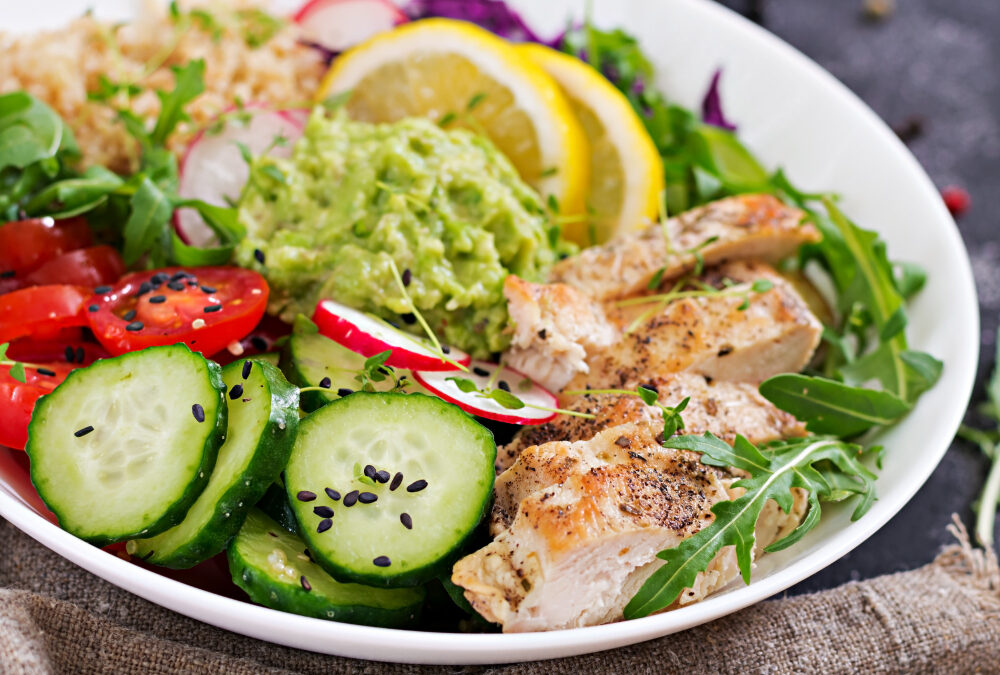
Plants add another critical element to this structure. Vegetables and high-fiber plant foods are low in energy density but high in volume. This means you can eat satisfying portions without consuming excessive calories. Fiber-rich foods also help stabilize blood sugar, support gut health, and improve overall nutritional quality. When half of the plate is filled with vegetables, calorie intake naturally decreases while fullness increases — without the feeling of deprivation.
Beyond physiology, the “protein and plants” approach simplifies decision-making. Many people struggle with weight loss not because they lack motivation, but because eating feels complicated and overwhelming. Too many rules and too many diet plans create confusion. A simple framework — start with protein, add vegetables generously, and then include carbohydrates thoughtfully if desired — reduces decision fatigue and builds consistency. It works at home, in restaurants, and while traveling. Simplicity makes habits repeatable.
Perhaps most importantly, this approach builds a lasting skill. Medication can reduce appetite temporarily. Short-term diets can lower weight for a season. But without learning how to structure meals in a balanced way, weight often returns when appetite normalizes or life becomes stressful. Protein and plants create a sustainable eating pattern that works whether someone is on medication or not. It shifts the focus from restriction to structure, from temporary dieting to long-term behavior change.
When meals are consistently built around protein and plants, hunger becomes more manageable, cravings become less intense, muscle is protected, calorie intake naturally declines, and overall health improves. It is one of the simplest adjustments with one of the highest returns in the entire weight-loss journey.
At Vitality Weight Loss, we focus on building life skills — not just lowering the number on a scale. Because lasting success is not about eating less for a few weeks. It is about learning how to eat differently for a lifetime.